2026 Harvest Crop Report
The early numbers are in—see the year’s global hop crop predictions.
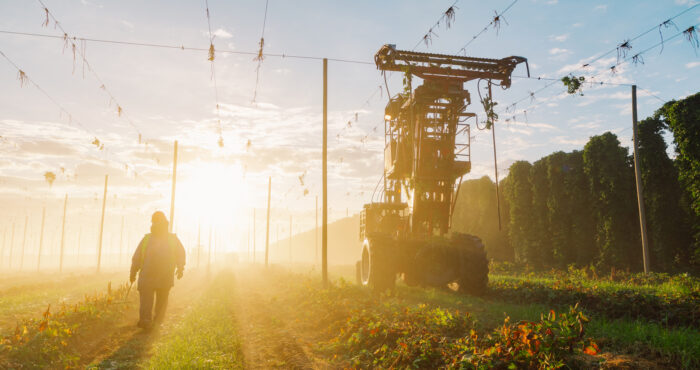
Now that the fields are clear and all harvested crops are moving into processing, it’s time to take an early look at the numbers. Key data points so far include another reduced acreage year worldwide, a slight increase in Citra® production, and substantial pressure on the European hop crop. Read on for more details.
Note: Figures preliminary where indicated; data sources include USDA NASS (2026); Verband Deutscher Hopfenpflanzer (2026); ÚKZÚZ (2026); Hop Products Australia (2026); International Hop Growers’ Convention; BarthHaas Report 2025/2026; United States Environmental Protection Agency; Bavarian State Statistics Office; BarthHaas Hop Update; Brewers Association; The New Brewer (Nov/Dec 2026).
STATE OF THE INDUSTRY
The 2026 global hop harvest tells a story of a market in transition. While growers continue adjusting acreage to better align production with brewer demand, regional weather challenges, shifting varietal preferences, and uneven availability are creating new considerations for brewers planning future supply.
Despite a slight increase from 2025, U.S. hop acreage remains well below its 2021 peak of 60,872 acres, with early reports indicating 42,192 acres planted in 2026. This longer-term reduction in acreage reflects ongoing industry efforts to better align hop production with brewer demand and address the excess supply accumulated over the past several years.
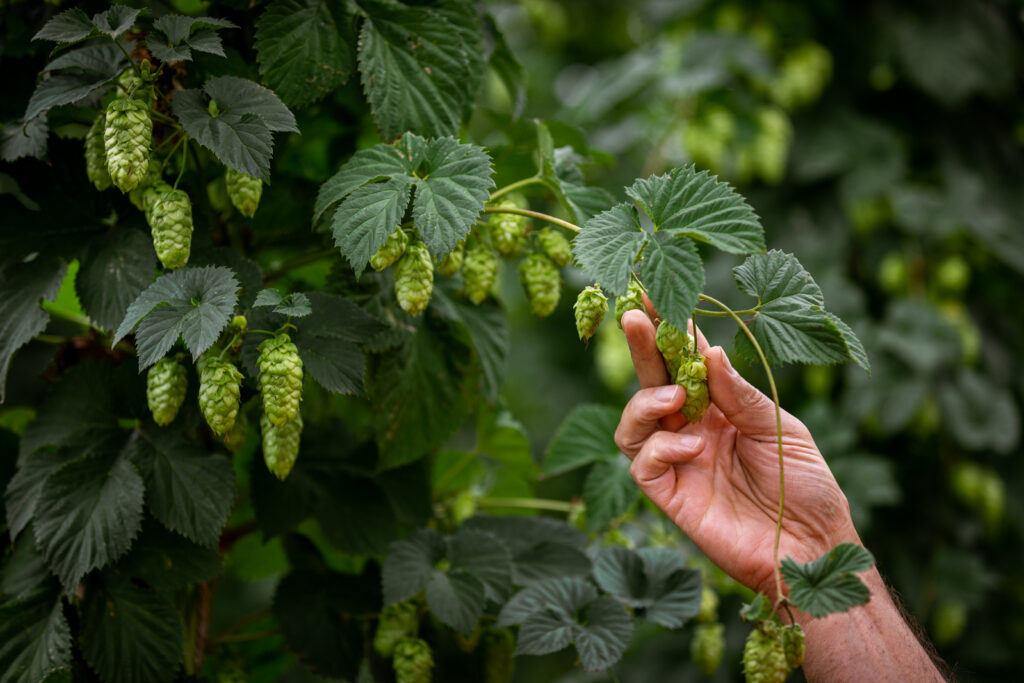
Australia
Australia experienced variable growing conditions across all regions in 2026, with a cool, wet spring followed by a hot, dry growing season that brought significant heat and drought stress. Despite these challenges, effective irrigation and crop management helped maintain healthy production, delivering strong yields and quality across varieties.
Hop Products Australia (HPA) has reported an 8.3% reduction in acreage from 2025, resulting in an 11.7% reduction in yield that will help them continue to right-size production. One notable exception to HPA’s across-the-board reduction is Luna® HPA-033, which exceeded demand expectations and will likely see increased acreage in the years to come.
Read more about the 2026 crop on HPA’s website.

Pacific Northwest
A more balanced hop market doesn’t necessarily mean every variety is readily available. Demand for emerging varieties can outpace supply, even as overall acreage stabilizes. This year, the Yakima Valley experienced a warmer and drier than average summer and an unusually rainy September, which altered harvest schedules for some farms and varieties. Despite these disruptions, early outlooks predict an average crop with potentially strong alpha performance. Idaho growers expect an above-average yield, while Oregon growers expect a fairly average yield.
Demand for established aroma varieties like Citra® and Mosaic® continues to shape the U.S. hop portfolio. Acreage for aroma varieties is more or less flat compared to the 2025 growing season, with inventory of Hop Breeding Company (HBC) varieties stabilizing. Newer, high-demand varieties like Krush® and Dolcita® remain in short supply, with acreage increasing conservatively year-over-year.
This year also saw a slight increase in alpha variety volume in the US, with newly commercialized HBC varieties like TerraSurge™ and TerraFlux™ producing high yields and a strong showing from other high-alpha varieties like Helios® and Pekko®.
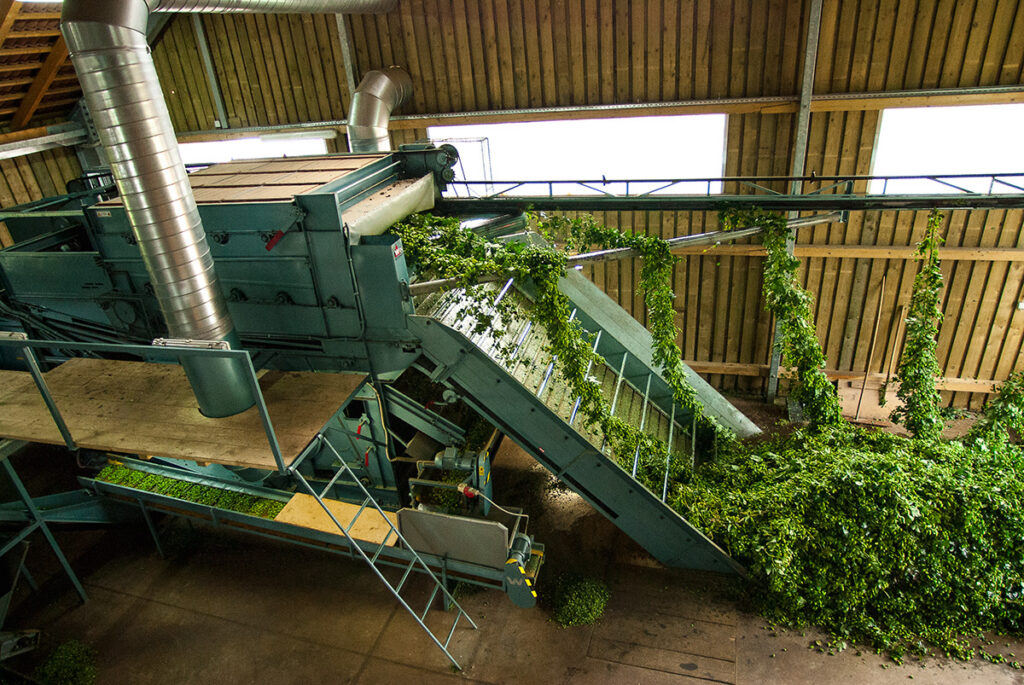
Germany & Czechia
The growing season in Europe was heavily affected by prolonged dry conditions in the spring and a very hot summer. Hallertau and other growing regions reported below-average yields, with some varieties like Saaz reporting yields up to 23% below the long-term average and exceptionally low alpha acid performance.
With growing conditions and crop performance varying significantly by region, access to a global hop supply network is increasingly valuable. Understanding how regional harvests compare—and where suitable alternatives may be available—helps brewers make more informed sourcing decisions and manage supply risk.
Europe’s 2026 harvest reinforces an important lesson for brewers: hop availability is only part of the equation. Alpha performance and crop consistency matter just as much. Brewers are advised to review their contract details and pay close attention to alpha values when planning brew days.
While climate pressures hit Europe hardest this year, heat, water availability, and regional weather patterns will remain important factors in crop development, yield potential, and quality around the globe.
VARIETAL DATA
This year’s increased alpha volume also represents a shift toward more efficient varieties being planted. CTZ continues to lead the way with an estimated 13.5M lb yield that matches last year’s production, while Helios, TerraSurge, and Pekko are expected to have increased yields over last year.
Citra, Mosaic, and Simcoe were among the leading aroma varieties by production volume. Of these, only Citra is expected to exceed last year’s production, increasing by less than 1%. Mosaic and Simcoe are projected to decline by 8.6% and 11.6%, respectively.
No single aroma variety is expected to see a substantial increase over last year as the industry continues to balance demand with reducing excess supply.
See more preliminary variety-specific data in 2026 raw materials issue of New Brewer Magazine.
LOOKING AHEAD
While the broader hop market continues to rebalance, supply of individual high-demand varieties may tighten as acreage and inventories adjust. For varieties such as Krush, Dolcita, and Luna, forward contracting is still the best tool for brewers to lock in supply.
Internationally, we’re seeing increased quality and consistency from the Australian crop thanks to smart investments in processing facilities, as well as adopting the Sensory Plus™ multi-layered analytical and sensory assessment for every lot harvested. However, unpredictable harvest conditions in Europe may indicate a need to turn to noble-type hops grown domestically. We recommend trialing HBC varieties like HBC 1134 c.v. to determine feasibility for supplementing and/or replacing hard-to-find European varieties sooner rather than later.
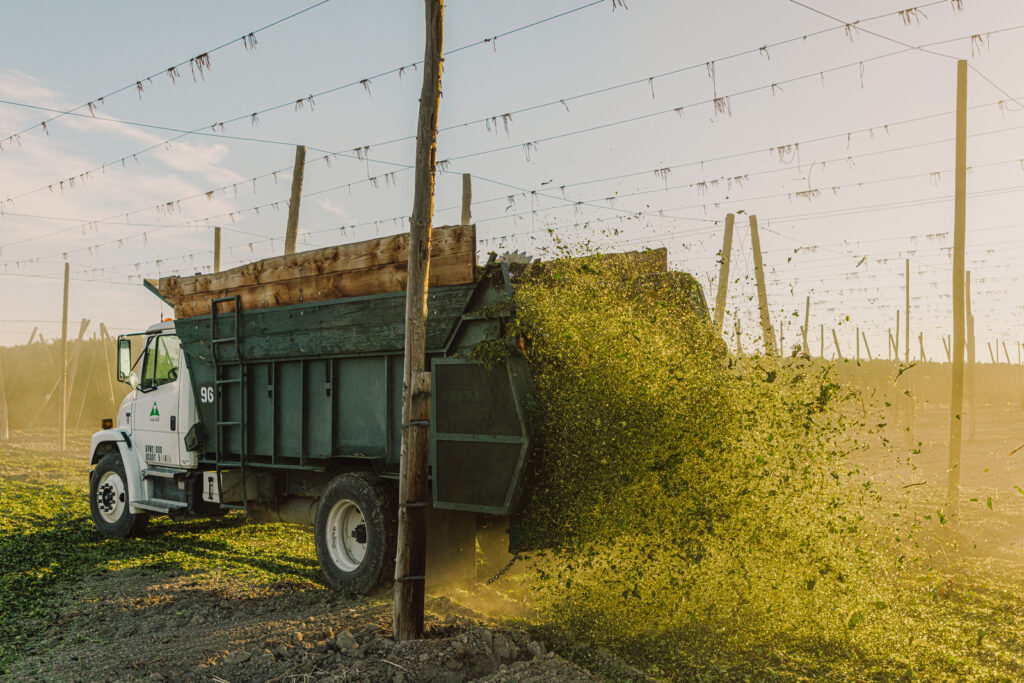
Growers are renewing their focus on sustainability, keeping a close eye on varieties with increased yields per acre and a strong resistance to disease and pests becoming a high priority. Alpha varieties that aren’t consistently producing double-digit percentages are not likely to continue being grown, and reduced pressure on the water supply is a strong consideration in drought-prone areas like the Yakima Valley.
One key takeaway for brewers is that hop availability doesn’t tell the whole story: variety supply, crop performance, and alpha consistency should all factor into purchasing and contracting decisions. Leveraging the BarthHaas group’s global crop intelligence, varietal expertise, and technical support can help brewers anticipate supply challenges, evaluate alternatives, and make confident contracting decisions. We will continue to collect data on the global 2026 hop growing season as reports are updated, and we recommend keeping an eye on the USDA National Hop Report for 2026, set to be published in mid-December.


