Brewing Better NA Beer: Creating an Appealing Pour
Non-alcoholic beer should still look like beer. By integrating advanced hop products, you can make sure consumers get the experience they expect from any style.
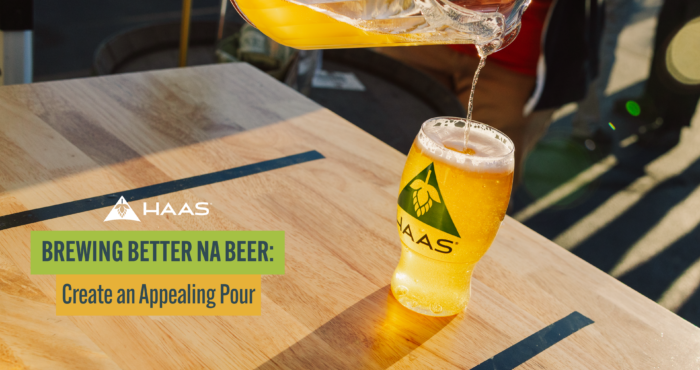
We drink beer with our eyes first. A pilsner without a satisfying foam head or a hazy IPA that lacks its signature haze can leave consumers underwhelmed before they even take a sip.
Appearance can be particularly challenging in non-alcoholic brewing. Reduced grain quantities in the mash can mean fewer proteins available to support foam formation and stability. Meanwhile, lower dry-hopping rates, physical alcohol removal, and dilution steps can reduce haze and diminish the juicy appearance associated with certain beer styles.
Brewing NA beers with less grain means that there’s less protein available to support the formation of foam. Advanced products like Tetrahop® can enhance beer foam when used post-fermentation, but brewers should be aware that it contributes more bitterness than iso-alpha-acids, and should factor that into their bitterness calculations. Regardless of the style, a beer with long-lasting foam stands out next to ones with foam that immediately falls flat.
For hazy IPA-style beers, traditional brewing often relies on substantial dry-hop additions to achieve the desired turbidity. But in NA beer, increasing dry-hop rates can introduce unwanted harshness and astringency, creating a trade-off between visual appeal and drinkability.
“Any form of dilution in a non-alcoholic production method can result in reduced haze. Whether we’re adding just a touch of haze or creating a hazy version of a normally bright product, HopHaze allows us to easily adjust prior to packaging.”
Chris Jennings, Dir. Brewing Technologies, Sustainable Beverage Technologies
Advanced hop products offer another way forward. HopHaze®, for example, can contribute haze without additional flavor impact, helping brewers achieve the intended appearance of a hazy beer without relying on excessive dry hopping, or even as a final adjustment post-fermentation.
Most importantly, advanced hop products allow brewers to address specific sensory needs rather than expecting one ingredient or process to do everything. By selecting the right tools for haze, flavor, mouthfeel, and bitterness, brewers can better manage the visual characteristics consumers expect from their favorite beer styles while maintaining a balanced non-alcoholic product.
This post is part of the Brewing Better NA Beer series:


